Gwydir Wetlands - Waterbird Lagoon Bird Hide
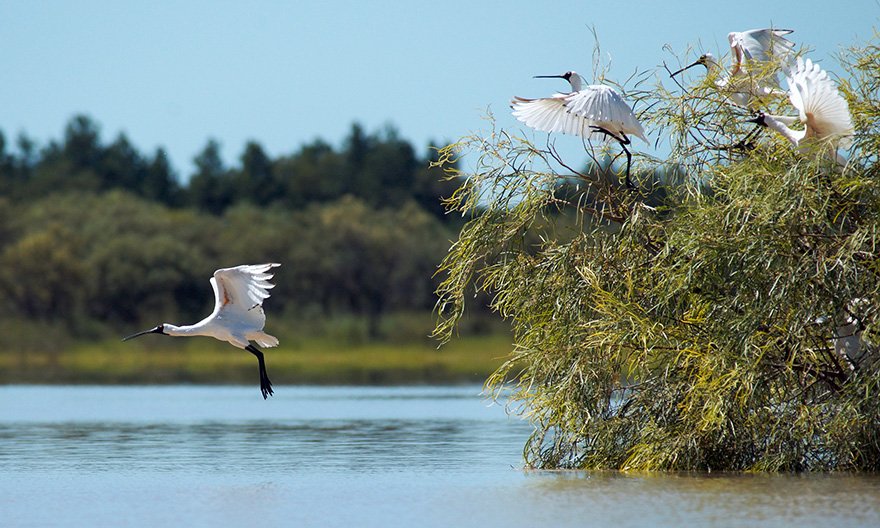
Waterbird Lagoon bird hide gets you close-up to the rich birdlife, frogs and wildlife of one of the most significant wetland systems in NSW.
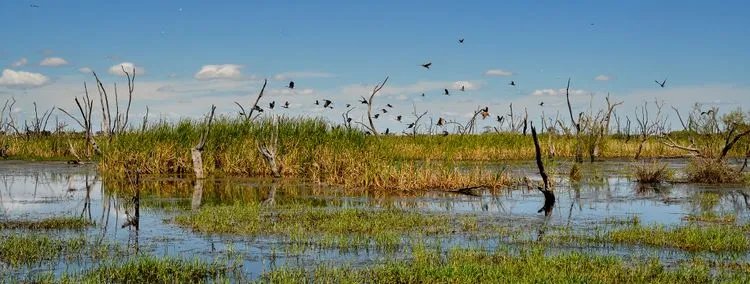
Up to 75 bird species flock to this Murray-Darling Basin wildlife haven when its semi-permanent waterholes fill with water. Nestled among rushes at the edge of one of the lagoons, the bird hide is the perfect spot to see birds go about their business, undisturbed.
Watch egrets, cormorants, darters, ibis, spoonbills and nankeen night herons step through the shallows. Remember to look up to see majestic white-bellied sea eagles soar overhead. If you’re lucky, you may even spot magpie geese, brolgas and endangered black-necked storks (Jabiru) – Australia’s only stork.
Bring your lunch for a peaceful picnic in the bird hide, or beneath a nearby gum tree. When you’re ready for a different point of view, take the unmarked 1km return stroll around the wetland and open woodland of belah trees. Launch your kayak into the lagoon if the water’s high. Linger till dusk to watch the sky light up in a dramatic sunset as frogs call all around you.
The shallow lagoon varies in depth, but can reach up to 90cm, a light weight canoe is a great way to get around. The National Parks and Wildlife Service provide a toilet and shaded seating area for your comfort, don't forget to pack your life vest and be sun safe at all times.
This trip is recommended in DRY WEATHER. Please contact Tourism Moree (02) 6757 3350 to ensure the Wetlands are accessible before your trip.
Check out the National Parks NSW website for a map and more visitor information.
The Gwydir Wetlands:
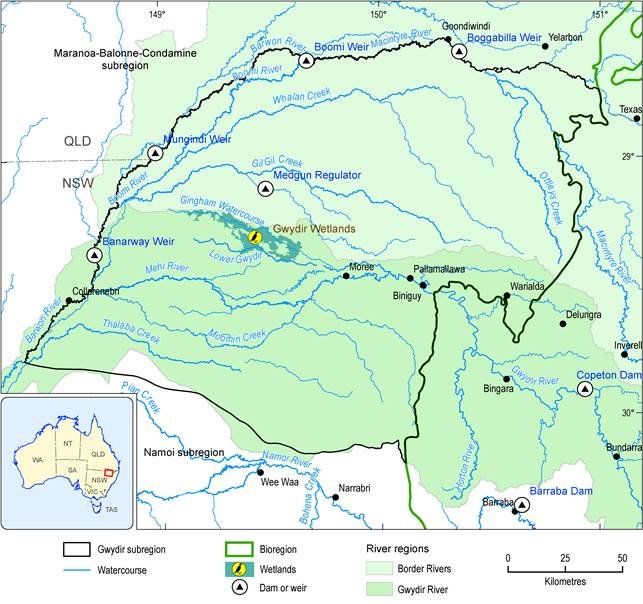
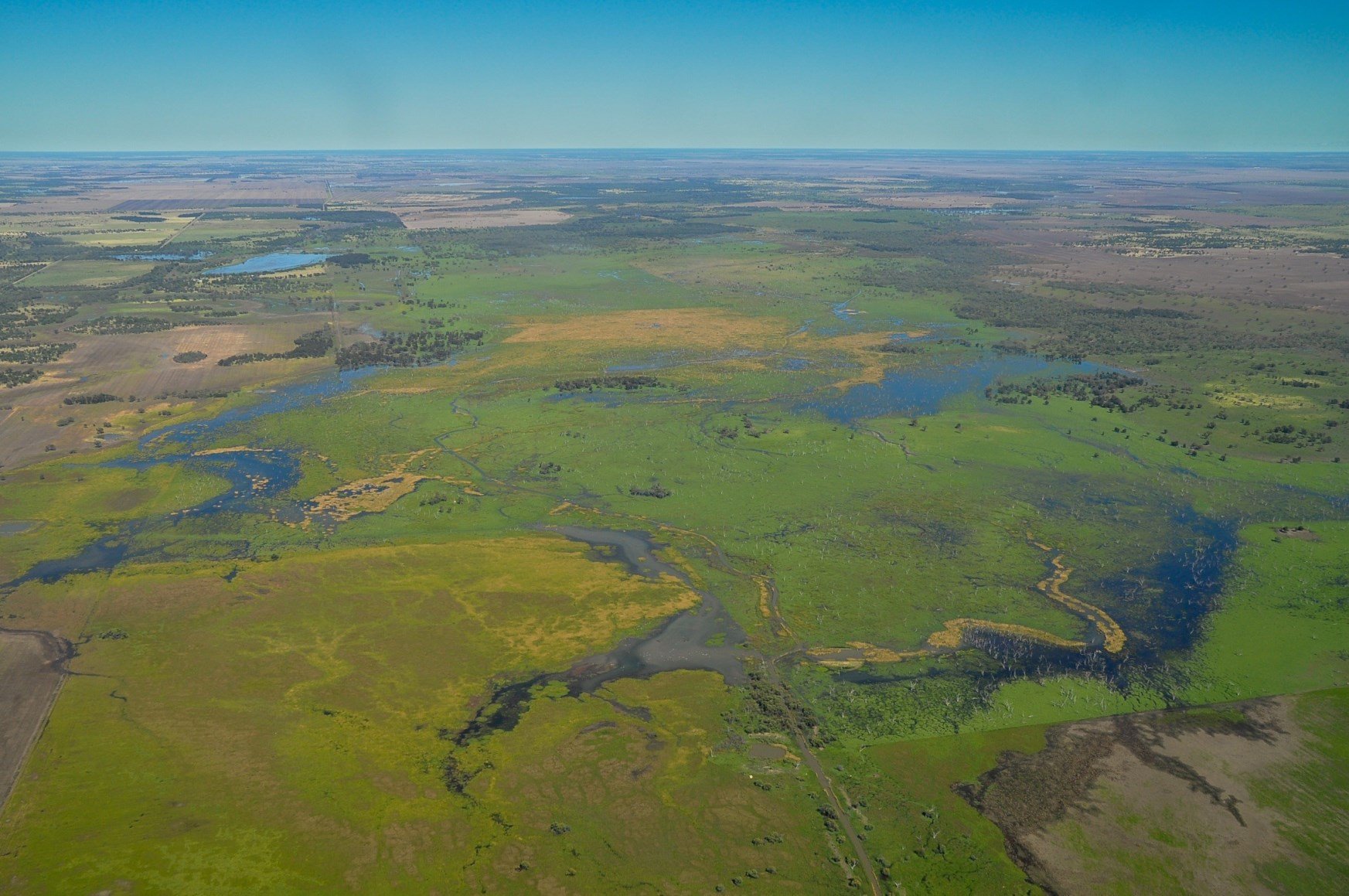
Located 60km northwest of Moree, the Gwydir Wetlands are an example of a terminal delta wetland, one of the few inland wetlands remaining in the Murray-Darling Basin. These magnificent wetlands are one of the most significant inland wetland systems in New South Wales. Since records began in the 1920s, at least 75 waterbird species (50 breeding) have been recorded in the Gwydir Wetlands.
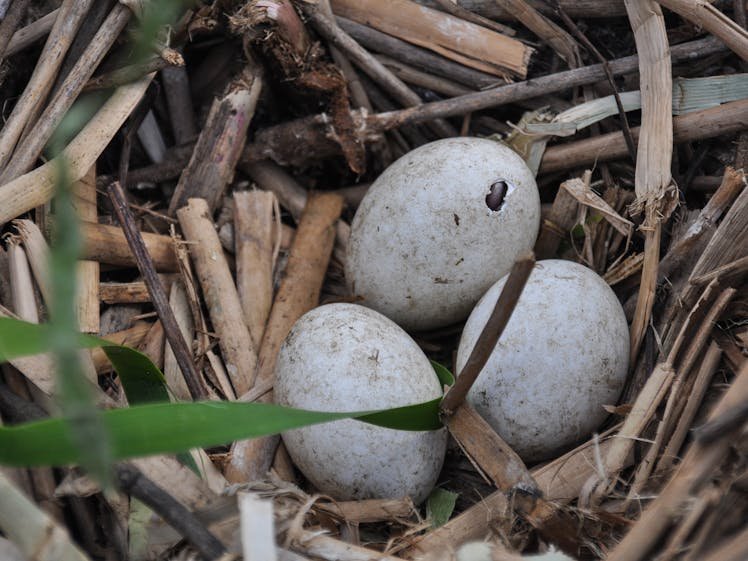
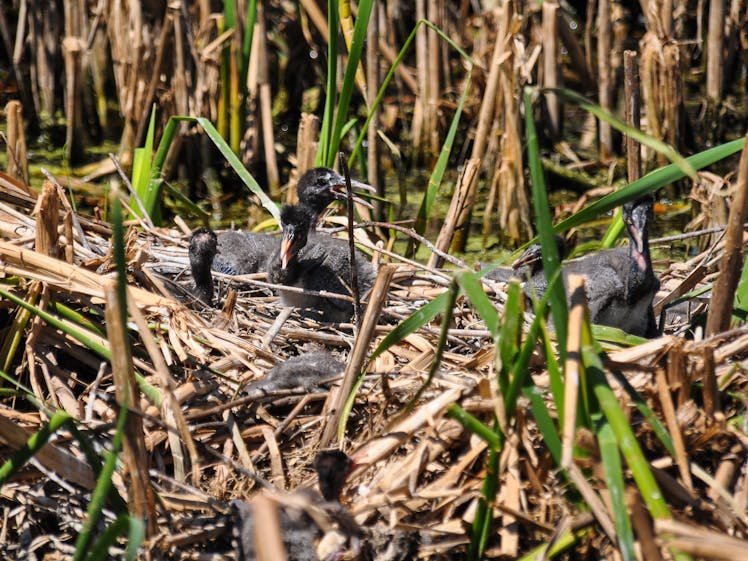
Colonially-nesting species, including Straw-Necked Ibis, intermediate Egrets, glossy Ibis and Nankeen Night-Herons have nested in large colonies when heavy upstream rainfall and floodwaters cause floods to extend across the wide Gwydir River floodplain. At one time, this wetland extended over 100,000 hectares, west from Moree to the Barwon Darling River in the far west. Today, the Wetlands are only 15% of their former extent. In a move to halt continual wetlands loss, four local land owners listed portions of their wetlands under the International Ramsar Wetlands Agreement in 1998.
At the time, the listed area was entirely privately-owned. Today, these wetlands are preserved as the Gwydir Wetlands State Conservation Area (SCA)